
Choose a building to
explore the campus
A calm, academic campus for disciplined manifestation study — texts, lectures, practice labs, and research tools.
Orientation takes about 10 minutes — choose a path, meet the mentors, and set your first intention.
No hype. No urgency. No 'manifest in 24 hours.' Just structured study and lived practice.
A free digital campus where you study the original texts of the New Thought tradition, learn from recorded talks, and connect with others doing the same work.
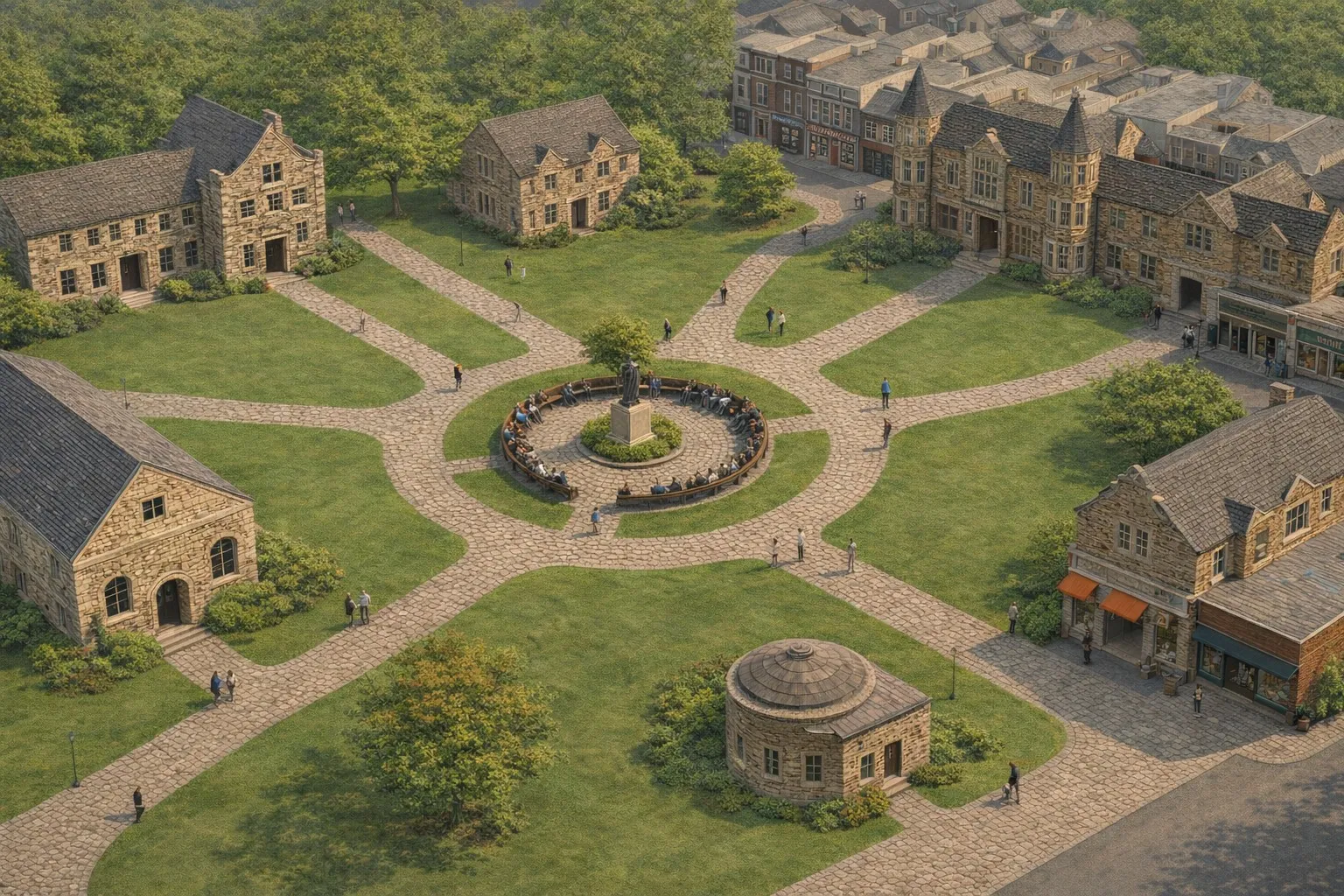
Click a building to enter that part of the campus.
Walk the campus — click any building to step inside.
Campus Buildings
Where the work happens.
Library
The original texts of the tradition, cross-referenced and built for close study.
Auditorium
Recorded talks and lectures, starting with Neville Goddard.
Administration
Enrollment, coaching, and the business of campus life.
Research Center
A place to look at the collective manifesting practice and compare it to your own.
Student Center
Discussion, cohorts, and shared practice. A study hall, not a hangout.
Mentoring Center
Personal one-on-one conversations with an AI mentor.
P.U.B.
Connect and hang out with others whose practice resonates with yours, at your own pace.
Academic Center
Paced coursework and live cohort sessions.
Bookstore
Books, print companions, and practical tools at the Manifesting-IT store.
The tradition behind the campus
Manifesting College is built around a specific lineage: the New Thought teachers of the late 19th and early 20th centuries who argued that imagination shapes experience. Their work is specific, testable, and largely out of print — scattered across archive sites and Gutenberg files with no structure around them.
The campus collects that work and builds a study environment around it. The Library holds the primary texts. The Mentoring Center lets you put questions to the teachers directly. The Academic Center structures the practice into courses with a cohort. The Research Center tracks patterns across thousands of practitioners.
The teachers whose work underpins the curriculum: Neville Goddard, Joseph Murphy, Florence Scovel Shinn, and Thomas Troward — among others. Not interpreted, adapted, or repackaged. The original texts, studied directly.